Political Correctness: Incorrect ✅ (Part II)
This post includes an original song-video that playfully reflects it.
Part I – Zverce remembers very well how immature he was in his early twenties – both in his thinking and in his behavior. Even though Zverce was often considered “a good example” of how one should present oneself in a civilized society, he was still driven by superficial desires, not truly knowing what he wanted from life. It wasn’t until around the age of 25-26 that deeper self-awareness and clarity began to take root within him.
Zverce raises this point because modern society not only expects – but almost demands – that young people, including minors and young adults, make life-altering decisions at a time when many simply aren’t ready for that, whether they realize it or not.
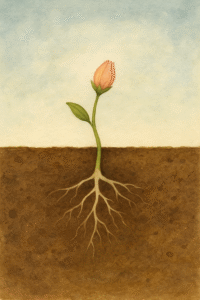
A flower about to bloom is at its most vulnerable stage. While the root remains underground, safe and protected, the moment the tiny sprout emerges it is exposed to everything in its environment – both helpful and harmful. And for that sprout to grow into a fully blossomed flower, it needs far more care and attention than the root needed to bring it into being.
Human beings are similar. We need parental guidance and protection for far longer than any other animal on this planet. And if we fail to safeguard children and adolescents during their development – or worse, exploit their vulnerability to push our own agendas – their inner “flowers” will never fully grow to experience the warmth and beauty of life. Or if they’re lucky, they’ll be left with mutilated petals, catching only fragments of the sunlight and gentle breeze meant for them.
“Mutilated petals” is a fitting analogy for underage transgender medical interventions – arguably one of the most inhuman outcomes of the body positivity movement. It’s one thing for a legally adult person to make such a decision, undergo a transition, and then celebrate it – or regret it. But to expose minors to these ideas, and not only allow but encourage them to undergo drastic, mostly irreversible changes to their developing bodies, should be treated as a crime.
In many cases, these adolescents aren’t even making the choice themselves. Instead, families or other parties drive them toward decisions that permanently alter their bodies. Consider this: how difficult is it to influence a young, vulnerable mind that is still trying to find its place in society? How easy is it to bend a fragile sprout that is still reaching toward the sky?
Instead of approaching youth with the utmost care and protection, some organizations have prioritized their own agendas, claiming to “give opportunities” that they lacked as youth living on the margins of society. From a humanistic perspective, this is a violation of basic humanity. Biology and modern medicine further confirm why these interventions are cruel at their core.
Our limbic system develops earlier than the logical part of the brain. This means that from childhood to early teens, our emotional reactions get stronger, and reward sensitivity increases (things feel more exciting or intense). Then, from teens to early 20s, limbic areas are highly active, which is why emotions, social approval, risks, and rewards feel more powerful during adolescence. And from early 20s to mid-20s, the limbic system matures as it becomes better regulated after connecting to the prefrontal cortex.
On the other hand, the prefrontal cortex finishes developing around age 24-26, whereas the limbic system is mostly ready by mid-teens. This is why teens feel strong emotions and often react impulsively. The lack of rational control at that age is due to the dominant limbic system, as the prefrontal cortex improves only in early adulthood – past their 20s. So, it’s not just their “hormones” that make teens behave the way they behave (as their parents normally describe it), but it’s because their limbic system is fully in control, and this system is all about quick reactions, jumping to conclusions, and making uninformed, fast decisions without considering consequences.
To take rational, well-thought-out action, the prefrontal cortex is needed – but it is simply underdeveloped at that age. This part of the brain is responsible for decision-making, self-control, planning, and what we often call “willpower.” Willpower and decision-making are essential when someone considers undergoing a full sex transition, but nature simply doesn’t support this kind of judgment at that stage of development.

Even when people act with good intentions, outcomes can still go awry. This illustrates the saying about the road to hell being paved with good intentions. When an individual is going through chaos internally, even if they have the best intentions in the world, whatever they express will only be an extension of their internal chaos. Often, the most vulnerable members of society bear the brunt, risking not just parts of their bodies but their futures altogether.
Another branch of the body positivity movement has shifted from a genuine fight against discrimination of LGBT people to a trend that normalizes oversexualized behavior. What began as a legitimate initiative for basic human rights has morphed into:
- Encouraging people to show more skin for attention or validation
- Treating sexuality as entertainment rather than something personal
- Rewarding shock value because it generates views and clicks
This shift not only creates unrealistic expectations about bodies and relationships – the exact opposite of what body positivity should promote – but together with mainstream sexualized culture, it has contributed to widespread pornography consumption, oversexualization, and the blurring of private and public behavior. Some effects on self-esteem and identity, which are central to body positivity, include:
- “Perfect” bodies causing body dissatisfaction
- People equating self-worth with attractiveness
- Sexualized trends spreading quickly, leading to confusion about healthy boundaries.
As this expression of internal chaos continues to grow, the proliferation of gender pronouns has followed, to the extent that there are incomplete lists of these pronouns. Yes, you’ve read that right: there are more genders to be discovered; therefore, some of these organisations don’t want to put an end to their already long lists.
Going back to the brain structure, there is a part connecting the two cerebral hemispheres called the ACC – anterior cingulate cortex. The ACC is responsible for emotion regulation, self-awareness, decision-making, and social behavior, among other things. It acts like a bridge between our emotions, our sense of self, and our decisions. In other words, it participates in self-processing, or how one thinks about oneself, and is active when people reflect on personal identity.
Many factors can negatively affect the ACC:
- Chronic stress – school pressure, family conflict, anxiety, social stress
- Lack of sleep – weakens emotional control, impulse control, and concentration
- Strong emotional conflict – heavy emotional pressure, confusion about identity, social anxiety
- Trauma or prolonged negative experiences – bullying, instability, constant fear
- Mental health conditions – anxiety disorders, ADHD, depression, OCD
Inflammation and physical health – general brain inflammation, infections, or poor physical health - High screen time and overstimulation – multitasking, rapid social media switching, online conflict, constant notifications
- MOST IMPORTANTLY – developmental stage, since the ACC is one of the areas that matures in the twenties.
Aside from the prefrontal cortex and insula (which helps connect the body to one’s sense of identity), the ACC plays a key role in forming one’s identity. Given its late maturity, along with other factors, this explains why the vast majority of the “gender neutral/nonbinary” demographic is youth. It’s not exclusive to youth, but current research suggests a significant portion are teens and young adults. In other words, the natural confusion that arises during coming of age is being exploited and misdirected, even if unintentionally or with good intentions, once again.
While in Yoga both sexuality/sexual orientation and gender identification can be considered fluid, movement can only occur along the same continuum between two extremes. One can identify with a part of the continuum that is not at an extreme but somewhere in between. However, it is not possible for a human being to identify with anything outside this continuum because it is simply not biologically founded. With the two extremes being female and male, in Yoga we recognize two sides of the body, Ida and Pingala. Although they are not viewed from a gender perspective but rather from the qualities they exude, Ida (left side of the body/right side of the brain) is considered feminine, while Pingala (right side of the body/left side of the brain) is considered masculine. Additionally, we inherit genes from both our mother and father, so both aspects are always present in us. But if a human being starts seeing themselves as something outside this nature-given framework, that most likely implies some kind of latent pathology and should be treated differently.
Just like the gender-neutral and fat acceptance movements are, in a way, the “white people’s N-word” and forces caution in how they are referred to, we also need to examine modern-day issues surrounding the original N-word. Racism in the world seems to have shifted, reversed, or transformed in some ways. Although it manifests as individual behavior or belief, racism has always expressed itself through groups, whether small local groups or large national movements. Otherwise, it cannot be sustained. A racist individual against an inclusive community will never stand a chance.
That’s the first thing to understand – it is never just an isolated case. Second, the repercussions of systemic racism against minorities (Black, Hispanic, Indigenous, etc.) require continuous effort and will probably not be resolved in the near future. It must be understood that this is not an issue specific to one country; it is an age-old global issue, and we should not wait for it to be resolved in order to start living in an all-inclusive community.
In other words, if we want to change the system, we should nurture a community where race is not even a question. For that to happen, the change needs to start with the community – i.e. ourselves. If we try to change institutions without addressing the individual, it will always remain a battle of “us” versus “them.”
This is where interpersonal racism, hate crimes, cultural and economic bias, and how they are handled play a major role. This is what has changed in the last few decades. From white privilege to Body Positivity and its “colors,” to racism extending in all directions, any type of it should be discouraged and sanctioned. Although the scale and consequences differ dramatically – institutional racism affects generations, while individual racism impacts everyday life – this is where the biggest contrast appears. On a systemic level, minorities are being targeted, but on an individual or local level, minorities target white people or each other. If the goal is the same – a non-prejudiced system – then we all should walk in the same direction. But if we try to pull others into our direction, regardless of whose direction that is, it will remain a never-ending power battle.
This is important to remember because individual racism, in the form of discrimination, stereotyping, and hostility from people of other races, feeds into the larger body of institutions. Trying to leverage this power as “white people’s systemic racism” versus “minorities’ individual racism” can only prolong the struggle, if it ever reaches an end. It is a dangerous terrain to be avoided by all means. How do we avoid it? By turning inward. The only way to create a loving and peaceful society is to create loving and peaceful human beings. No institution or law can enforce that. By turning inward, our outward expression becomes more inclusive. The sooner we realize we can change others only by changing ourselves, the faster the change will come.
In Yoga, or any spiritual practice for that matter, the main goal is to stop identifying with anything. One of the first insights is that you are not your body or your mind. In essence, you stop seeing yourself as a man, a woman, or something else with different pronouns; of this body type; of this or that sexual orientation; of this or that ethnic background, etc. When the false identification falls away, the body-mind complex no longer plays a significant role. But to even scratch the surface of this realization, you need to go beyond the surface and reach the very core of who you are. So maybe next time you want to express yourself as a (insert here: body type, skin color, gender, religion…) person, ask this question: do I even know who I really am?
copyright © Zverce 2025